The Land Development Process: From Raw Land to Build-Ready Property
Why Experienced Project Coordination Matters
Transforming undeveloped property into a residential community, commercial site, industrial facility, or public-use project requires much more than clearing trees and moving dirt. The land development process is a coordinated series of planning, approval, engineering, and construction activities that determine whether a property can support its intended use.
Every site presents different opportunities and challenges. Soil conditions, drainage patterns, zoning restrictions, utility access, topography, environmental concerns, and municipal requirements can all affect a project. Understanding the major development stages helps landowners, developers, builders, and municipal partners make informed decisions before construction begins.
What Is the Land Development Process?
The land development process is the progression through which raw or underutilized property is evaluated, approved, engineered, improved, and prepared for construction.
Although every project is different, the process generally includes:
- Land identification and preliminary evaluation
- Due diligence and feasibility analysis
- Conceptual planning and community coordination
- Entitlements, zoning, and permitting
- Engineering and construction planning
- Clearing, excavation, and grading
- Drainage, utilities, roads, and infrastructure
- Inspections, final stabilization, and lot delivery
These stages are closely connected. Decisions made during due diligence can influence the site plan, while engineering plans affect grading quantities, drainage systems, infrastructure costs, and construction schedules.
1. Land Identification and Preliminary Evaluation
The land development process begins by determining whether a property aligns with the project’s intended purpose. A parcel that appears promising may still have physical, regulatory, or infrastructure limitations that affect its development potential.
The preliminary evaluation may consider:
- Property size and configuration
- Existing zoning
- Road access
- Surrounding land uses
- Available water and sewer service
- Topography and drainage
- Environmental features
- Proximity to employment, schools, transportation, and community resources
For residential development, the team may also evaluate whether the property can support the desired number and type of homesites. Commercial and industrial projects may require additional consideration of traffic access, parking, utility capacity, and future operational needs.
2. Due Diligence and Feasibility Analysis
Due diligence provides a more detailed understanding of the property before major investments are made. This is one of the most important stages because it helps reveal conditions that could alter the project scope, budget, or timeline.
Depending on the site, due diligence may include boundary and topographic surveys, geotechnical investigations, environmental reviews, utility research, title evaluation, wetland assessments, and preliminary civil engineering.
A strong feasibility analysis does not simply ask whether the property can be developed. It considers whether the proposed project can be completed responsibly, efficiently, and in a way that creates long-term value.
Identifying concerns early in the land development process gives the team more time to adjust the plan, evaluate alternatives, and prevent avoidable surprises during construction.
3. Conceptual Planning and Community Coordination
Once the property’s basic feasibility has been established, the project team begins developing a conceptual site plan. This plan illustrates how the land may be organized and how its different elements will work together.
A residential concept might show streets, homesites, open space, stormwater facilities, sidewalks, and community amenities. A commercial plan may include building locations, parking areas, loading zones, utility corridors, entrances, and internal roadways.
Community involvement may also become important during this stage. Productive coordination with neighboring property owners, municipal representatives, planning officials, engineers, and other stakeholders can help identify concerns and improve the project before formal approvals are pursued.
4. Entitlements, Zoning, and Permitting
Entitlements are the governmental approvals that allow the property to be developed for a particular use. Depending on existing zoning and the proposed project, this stage may involve rezoning, subdivision approval, conditional-use approval, development agreements, or other local reviews.
Permitting requirements may address:
- Grading and land disturbance
- Erosion and sediment control
- Stormwater management
- Water and sewer connections
- Roadway access
- Environmental protection
- Infrastructure construction
Requirements vary among municipalities and jurisdictions throughout North Carolina and South Carolina. A development partner with local knowledge and established working relationships can help maintain clear communication and move the review process forward efficiently.
Because approval timelines can affect the entire land development process, entitlement and permitting strategies should be considered early rather than treated as an afterthought.
5. Engineering and Preconstruction Planning
After the development concept advances, civil engineers prepare detailed construction documents. These plans establish elevations, road alignments, utility locations, storm drainage systems, erosion-control measures, retaining structures, and other technical requirements.
The land development contractor then reviews the plans from a construction perspective. This preconstruction review can identify opportunities for value engineering, more efficient sequencing, material coordination, equipment planning, and risk reduction.
A well-coordinated plan helps ensure that the engineers, developer, contractor, utility providers, and municipal representatives are working from the same information before major site work begins.
6. Clearing, Excavation, and Grading
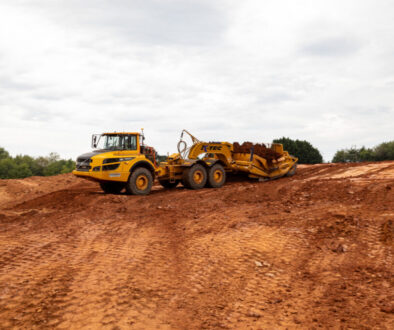
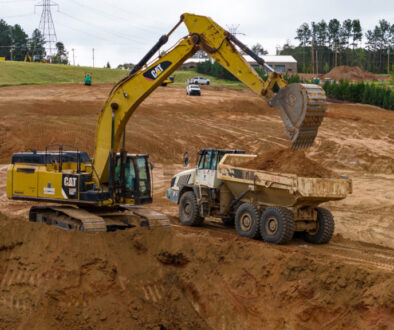
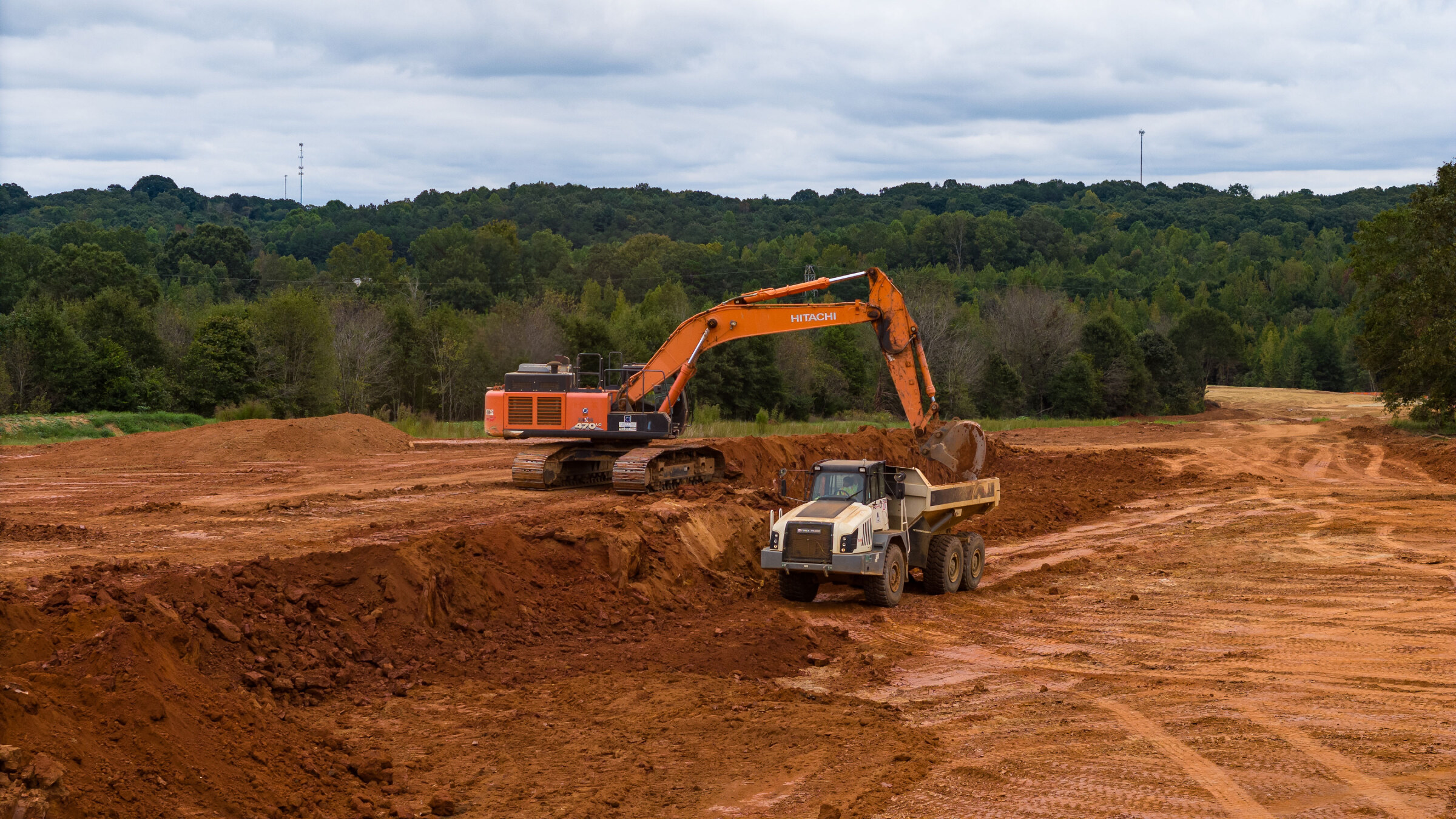
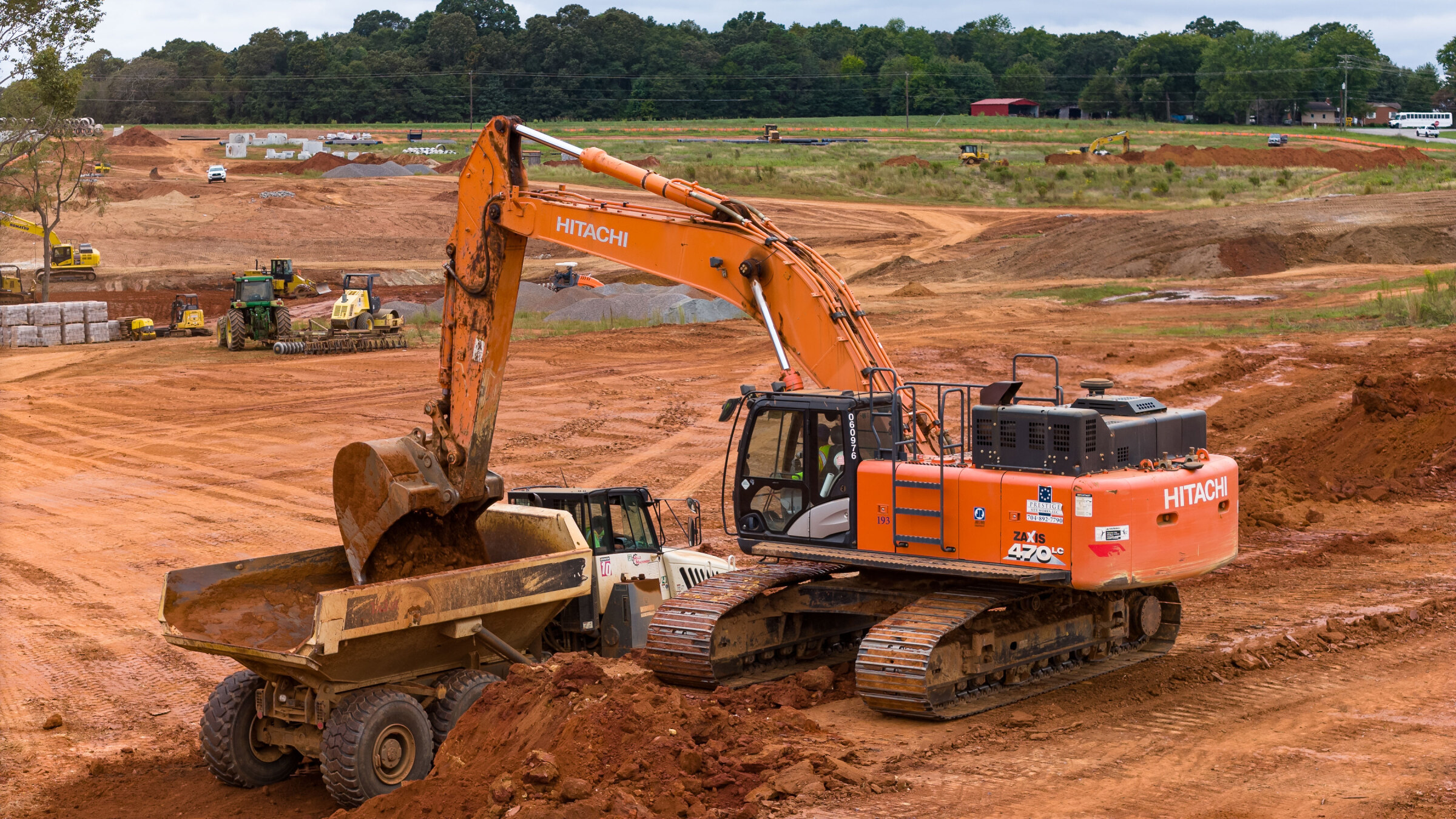
Physical site preparation begins after the required approvals are secured and construction planning is complete. Crews may remove vegetation, demolish existing structures, strip unsuitable materials, and prepare access points for equipment.
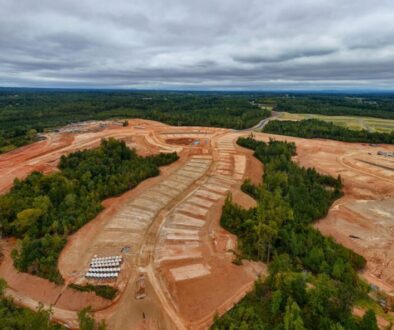
Excavation and grading reshape the land according to the engineered plans. This work establishes building pads, streets, slopes, drainage patterns, utility corridors, and other essential site elevations.
Grading must be performed carefully. Improper elevations or insufficient soil compaction can contribute to standing water, erosion, unstable building areas, pavement failure, and expensive corrective work.
Throughout this stage of the land development process, erosion and sediment controls help protect adjoining properties, waterways, infrastructure, and disturbed soil.
7. Installing Utilities, Drainage, Roads, and Infrastructure
Underground infrastructure must be installed in a carefully planned sequence. Depending on the project, this can include sanitary sewer lines, water mains, storm drainage, natural gas infrastructure, electrical conduit, and telecommunications pathways.
Road construction may involve subgrade preparation, aggregate base, curb and gutter, sidewalks, and asphalt paving. Stormwater systems may include catch basins, pipes, culverts, detention facilities, retention ponds, and stabilized drainage channels.
Coordination is critical because one improperly located utility or incorrect elevation can interfere with another system. A vertically integrated land development and site work team can help reduce communication gaps by coordinating multiple phases under one project structure.
8. Inspections, Stabilization, and Lot Delivery
As construction progresses, various components are inspected to confirm that they comply with approved plans and applicable requirements. Testing may also be performed to verify soil compaction, utility performance, roadway preparation, and other construction standards.
Final stabilization can include permanent seeding, landscaping, erosion-control completion, pavement installation, cleanup, and completion of remaining punch-list items.
For residential communities, the final result may be finished homesites ready for builders. Commercial or industrial projects may be delivered as development-ready properties prepared for vertical construction.
Successful lot delivery represents the completion of the land development process, but the quality of the decisions made during every previous stage determines how well the finished property will perform.
How Long Does the Land Development Process Take?
The land development process can take several months or multiple years, depending on the project’s complexity. Property size, rezoning requirements, environmental conditions, engineering revisions, municipal review schedules, utility availability, weather, and infrastructure needs can all influence the timeline.
A relatively straightforward site with appropriate zoning and nearby utilities may advance more quickly. A large residential community or mixed-use development requiring rezoning, extensive infrastructure, and multiple agency approvals will usually require more time.
Early planning cannot eliminate every delay, but it can create a more realistic schedule and reduce preventable disruptions.
Why an Integrated Development Partner Matters
Land development requires coordination among many professionals and public agencies. When responsibilities are fragmented among unrelated parties, information can be delayed, overlooked, or misunderstood.
Prestige combines land acquisition knowledge, due diligence, entitlements, development oversight, site contracting, and lot delivery within an integrated operation. This approach provides greater continuity from the initial property evaluation through final construction.
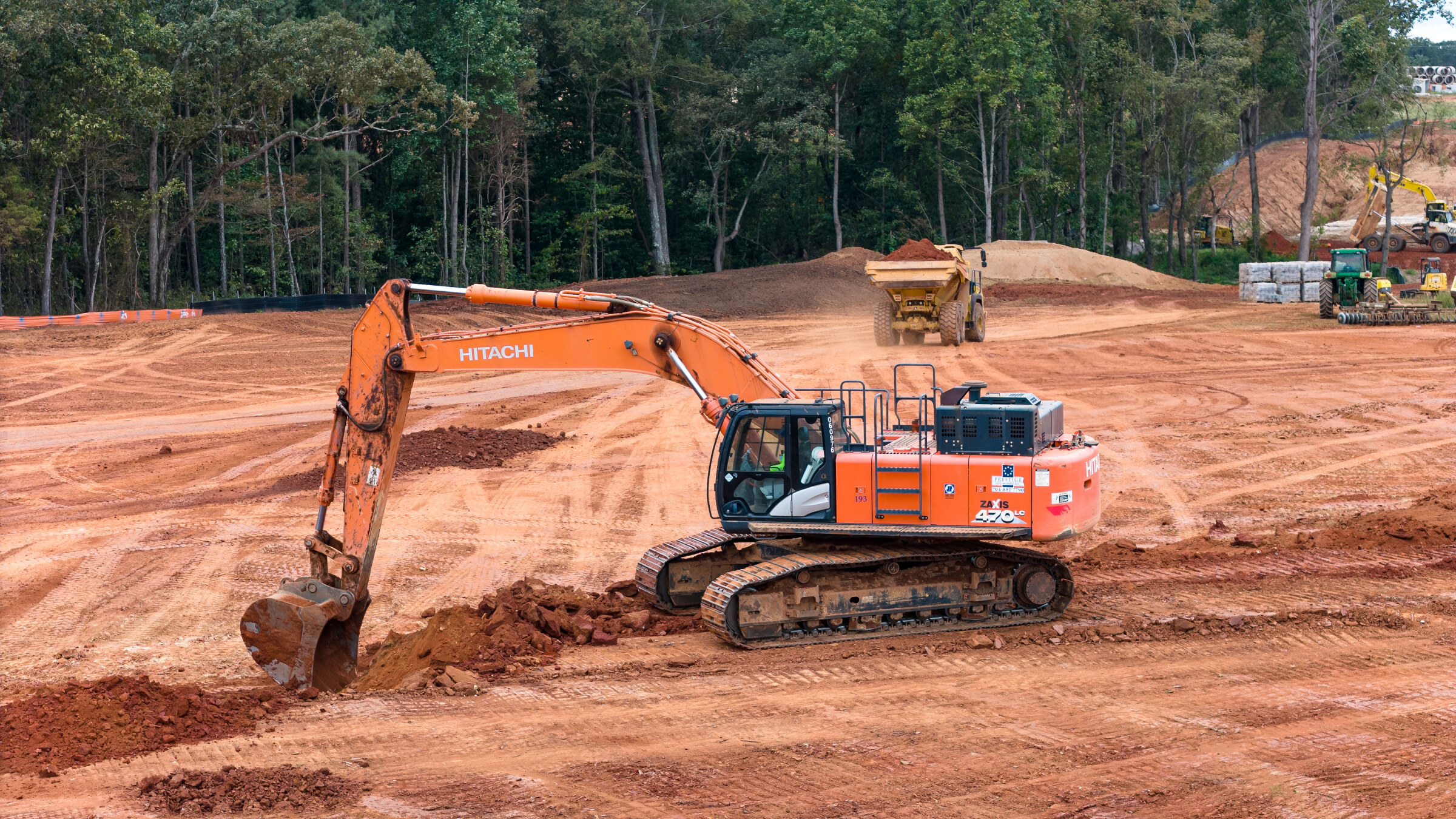
Prestige works with landowners, developers, home builders, engineers, contractors, municipalities, and community stakeholders throughout Charlotte, Greensboro, Raleigh, and other North Carolina markets, as well as Columbia and Greenville-Spartanburg, South Carolina.
Frequently Asked Questions
-
1. What is the land development process?
The land development process is the series of steps used to evaluate, approve, engineer, and prepare property for construction. It commonly includes land identification, due diligence, site planning, entitlements, permitting, grading, utility installation, roadway construction, inspections, and lot delivery.
-
2. What is the first step in developing raw land?
The first step is evaluating the property and its development potential. The project team reviews factors such as zoning, access, topography, utilities, drainage, environmental conditions, property dimensions, and the intended use before investing in detailed plans.
-
3. How long does the land development process take?
The land development process can take several months or multiple years. The schedule depends on the property, proposed use, approval requirements, infrastructure needs, environmental conditions, municipal review timelines, weather, and overall project complexity.
-
4. What is due diligence in land development?
Due diligence is the detailed investigation of a property’s physical, legal, environmental, and regulatory conditions. It may include surveys, soil testing, environmental reviews, zoning research, utility studies, title evaluation, and preliminary engineering to determine whether a project is feasible.
-
5. What makes property build-ready?
A property becomes build-ready after the required approvals, grading, drainage, access, utilities, infrastructure, inspections, and stabilization work have been completed. The exact requirements depend on whether the site will support residential, commercial, industrial, mixed-use, or municipal construction.
Building Stronger Projects from the Ground Up
A successful development begins long before construction equipment arrives. Careful evaluation, thoughtful planning, effective approvals, precise engineering, and properly coordinated site work all contribute to a safer, more functional, and more valuable property.
By understanding the land development process, project stakeholders can evaluate opportunities more effectively, anticipate potential challenges, and choose partners capable of managing the work from concept through completion.
Prestige helps transform land into development-ready properties, quality homesites, reliable infrastructure, and thriving communities across the Carolinas. Contact Prestige to discuss your property, upcoming development, or site work needs.

Let’s Build Something Together.
Let’s Talk About Your Land’s Potential
Partner with Prestige and discover what working with a premier land developer can achieve. We are ready to turn your vision into reality.